There was a time when receiving quality medical care meant one thing: going to a clinic or hospital. That time is passing quickly. Today, a quiet revolution is reshaping how patients heal, recover, and manage their health, and it is happening right inside their own homes.
For older adults, people recovering from surgery, individuals living with chronic illnesses, or anyone managing a disability, this shift is not just convenient. It is genuinely life-changing. Let us walk through what is driving this transformation and what it means for patients and families today.
Why At-Home Care Is Becoming the New Standard
Home is where people feel safest and most comfortable. Research has consistently shown that patients recover faster and experience less anxiety when they can heal in familiar surroundings. Add to that the burden of travel, the cost of hospital stays, and the strain on healthcare systems globally, and it becomes clear why home-based care is growing rapidly.
What has made this growth possible is technology. Innovations in connectivity, artificial intelligence, wearable devices, and smart systems have closed the gap between what a clinic can offer and what a home can now provide.
The Technologies Reshaping Care at Home
1. Telehealth: Your Doctor Is Now One Click Away
Not every medical visit needs to happen in person. Telehealth platforms allow patients to consult their physicians, specialists, and mental health professionals through secure video calls, often from the comfort of their living room.
Modern telehealth goes far beyond a simple video chat. Providers can review lab results in real time, adjust prescriptions, conduct follow-up consultations, and even triage urgent symptoms, all without the patient leaving home. For those in rural areas or those with mobility difficulties, this is genuinely transformative access to care.
2. Remote Monitoring: Keeping Watch Without Being Intrusive
Devices that measure blood pressure, blood glucose, oxygen saturation, and heart rate can now send data directly to a patient’s care team in real time. If a reading falls outside a safe range, the provider is alerted immediately, sometimes before the patient even notices a symptom.
For people managing hypertension, diabetes, or heart disease, this constant and invisible monitoring creates a safety net that did not exist a decade ago. It reduces emergency room visits and allows treatment plans to be adjusted quickly based on actual data rather than infrequent check-ins.
3. Wearable Smart Technology: Health on Your Wrist
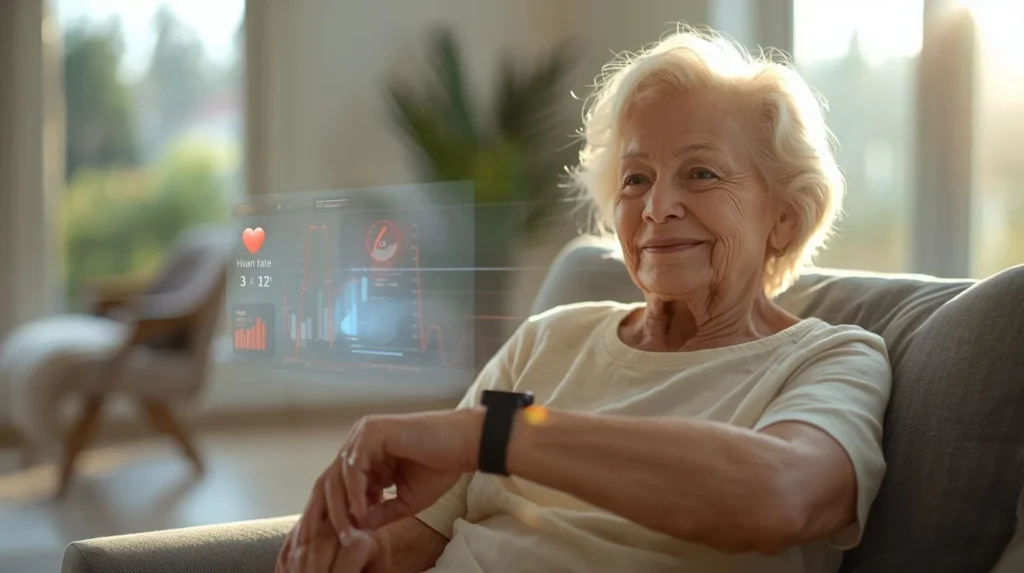
Smartwatches and wearable devices have matured well beyond step counting. Today’s devices can detect irregular heart rhythms, monitor sleep quality, track stress levels through heart rate variability, and even detect falls automatically, sending alerts to family members or emergency services.
For elderly patients living alone, fall detection alone is a potentially life-saving feature. The moment a fall is detected and goes unacknowledged, an alert is sent to a designated contact or emergency responder. This type of passive safety net gives both patients and families real peace of mind.
4. Smart Home Integration: An Environment That Responds to You
A truly supportive home health environment goes beyond medical devices. Smart home technology, including voice-activated assistants, connected lighting, automated thermostats, and smart locks, creates a living space that adapts to the patient’s needs.
Someone with severe arthritis, limited vision, or post-surgical restrictions can control nearly every aspect of their home environment using only their voice. This level of independence has enormous emotional and psychological value, not just practical benefits.
5. AI-Assisted Health Analysis: Smarter Data, Better Decisions
Artificial intelligence is becoming one of the most powerful tools in home health care, not as a replacement for human providers but as a tireless analytical partner. AI systems can review continuous streams of patient data and flag patterns that might indicate a developing problem, long before it becomes serious.
Imagine a system that notices subtle changes in a patient’s sleep patterns, activity levels, and heart rate over several days and alerts their physician that something may be off. That kind of early detection, at scale and without human fatigue, is where AI adds irreplaceable value.
6. Virtual Reality in Rehabilitation: Healing Through Immersion
Physical therapy is notoriously difficult to keep patients engaged with, especially during long recoveries. Virtual reality is changing that by turning exercises into interactive, immersive experiences.
A patient recovering from a stroke can practice balance exercises through a VR environment that responds to their movement. Someone rebuilding strength after a knee replacement can complete guided routines in a virtual setting that feels more like play than pain. The gamification of therapy increases motivation, improves consistency, and ultimately leads to better outcomes.
7. Smart Hygiene and Wellness Monitoring
This category is still emerging but holds real promise. Smart toilets and similar devices can analyze biological markers to monitor hydration, detect signs of infection, track digestive health, and screen for early indicators of certain conditions. The goal is to make routine health monitoring passive and unobtrusive, embedded naturally into daily life rather than requiring active effort from the patient.
8. Care Coordination Platforms: Bringing the Care Team Together
One of the most overlooked challenges in home health care is communication. A patient might be working with a primary care doctor, a specialist, a physical therapist, a home health aide, and a family caregiver, all of whom need to be on the same page.
Digital care coordination platforms solve this by creating a shared space where appointments are scheduled, medication reminders are sent, progress is tracked, and messages can flow between everyone involved in a patient’s care. When the team is aligned, care is smoother, safer, and more effective.
9. Robotic Assistance: The Next Frontier
Robotic assistants for home health care are still largely in development and pilot phases, but the trajectory is clear. Future robots will be capable of retrieving items for patients with limited mobility, reminding patients to take medications, monitoring vital signs, detecting falls, and even providing basic companionship.
These systems will not replace human caregivers. Rather, they will handle repetitive and logistical tasks so that human caregivers can focus on the emotional, relational, and skilled aspects of care that only people can provide.
What This Means for Patients and Families Right Now
The benefits of these technologies are already being felt by patients around the world. Access to care has expanded significantly, particularly for those who previously faced geographic or physical barriers. Treatment is becoming more personalized because providers now have richer, more continuous data. Patients are more engaged in their own health because they can see what is happening in real time. Adherence to treatment plans improves when reminders and monitoring are built into daily routines. And over time, many of these technologies reduce the overall cost of care by preventing complications and reducing hospitalizations.
What the Next Decade Holds
Looking ahead, the integration of these technologies will deepen. Devices will become smaller and less intrusive. AI will grow more accurate and predictive. Connectivity between the patient’s home and their care team will become seamless and instantaneous. Care will feel less like a system someone navigates and more like a network that quietly supports them.
The home of the future may not look dramatically different from the outside, but inside, it will be one of the most sophisticated healthcare environments imaginable.
A Final Thought
If you or someone you love is managing a condition that makes leaving home difficult, or if you are simply looking for more convenient, effective care, it is worth having a conversation with your healthcare provider about what home-based options are available to you. The technology exists. The systems are in place. The question is simply whether the right combination has been connected to your needs.
The future of healthcare is not just in better hospitals. It is in smarter, more compassionate care delivered wherever the patient calls home.