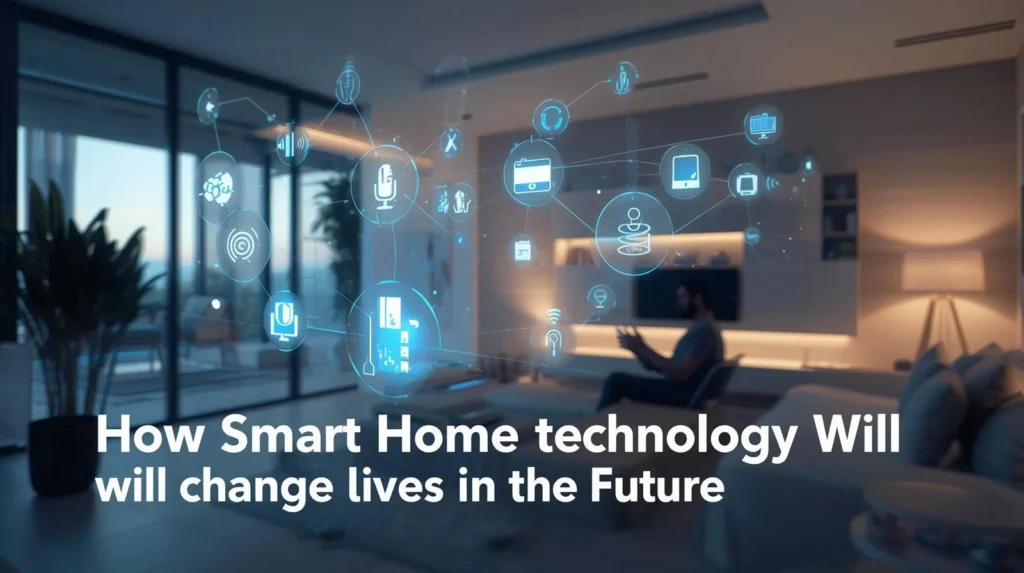
I have been watching how technology is slowly becoming part of daily life. From simple mobile apps to voice assistants, everything is getting smarter. Now homes are also changing. When I think about the future, I clearly see how smart home systems will shape the way we live, work, and feel inside our homes.
In this article, I will explain in simple words how smart home future trends are shaping homes and daily habits.
What Smart Homes Really Mean
A smart home is a house where devices are connected and controlled through the internet. I can control lights, fans, security cameras, and even kitchen appliances using my phone or voice.
This is not just about comfort. It is about saving time, improving safety, and making life easier.
How Daily Life Will Change

When I imagine my daily routine in a smart home, everything feels smooth and automatic.
Here is what will change:
- Lights turn on automatically when I wake up
- Coffee machine starts without me touching it
- Curtains open based on sunlight
- Temperature adjusts based on weather
I will not need to do small repetitive tasks. The home will do it for me.
This is where the idea of How Smart Home Technology Will Change Lives in the Future becomes real.
Better Safety and Security

Security is one of the biggest benefits I see.
Smart homes can:
- Send alerts if someone enters the house
- Show live camera feed on my phone
- Lock doors automatically
- Detect unusual movement
Even when I am not at home, I can still monitor everything. This gives peace of mind.
Saving Energy and Money

One major change I notice is in energy usage.
Smart systems help by:
- Turning off unused devices
- Adjusting temperature smartly
- Tracking electricity usage
- Reducing waste
Over time, this saves money. It also helps the environment.
Health and Comfort at Home

I believe future homes will care about health too.
Some examples:
- Air quality sensors will alert me if air is bad
- Smart beds will track sleep
- Lighting will adjust for better mood
- Temperature will match body comfort
This makes the home not just a place to live, but a place that supports well being.
Voice Control and AI Assistance

7
In the future, I will not even need to use my phone much.
I can simply say:
- Turn off lights
- Play music
- Lock the door
- Set temperature
AI will also learn my habits and act before I ask.
This is how smart home future systems are shaping homes in a more personal way.
Challenges I Still See
Even though smart homes are powerful, I also see some issues:
- High setup cost
- Internet dependency
- Privacy concerns
- Device compatibility problems
These are real challenges, but I believe they will improve with time.
Final Thoughts
From my perspective, smart homes are not just a trend. They are the next step in how we live. The idea of sipider.com how smart home technology will change lives is not just a topic, it is something we will experience daily.
In the coming years:
- Homes will think and respond
- Daily tasks will reduce
- Safety will improve
- Life will become more organized
I see a future where homes are not just buildings. They become smart partners that understand and support us.
That is how smart home technology will truly change lives in the future.
FAQs: How Smart Home Technology Will Change Lives in the Future
1. What is smart home technology in simple words
Smart home technology means using internet connected devices to control and manage things in a house. I can control lights, fans, security cameras, and appliances using my phone or voice. It makes daily tasks easier and faster.
2. How smart home technology will change lives in the future
Smart homes will reduce manual work and save time. I will not need to switch devices on and off again and again. The system will learn my routine and handle tasks automatically. Life will become more organized, safe, and comfortable.
3. Is smart home technology expensive to set up
At present, some devices are costly, especially full home systems. However, I can start small with basic devices like smart bulbs or plugs. Over time, prices are becoming lower, so more people can afford it.
4. Can smart homes help save electricity
Yes, smart homes can reduce electricity usage. Devices turn off automatically when not in use. Smart thermostats adjust temperature based on need. I can also track power usage and control waste.
5. Are smart homes safe from hacking
Smart homes are safe if proper security steps are followed. I always use strong passwords and update devices regularly. Trusted brands also provide better protection. However, internet based systems always need careful use.
6. Do smart homes work without internet
Some features may work without internet, like basic device control through local connection. But most advanced features like remote access and voice control need internet to work properly.
7. What are the most useful smart home devices
From my experience, these devices are most useful:
- Smart lights
- Smart speakers
- Security cameras
- Smart door locks
- Smart thermostats
These devices improve comfort, safety, and control.
8. How smart home future is shaping homes
Smart home future trends are shaping homes by making them more intelligent and responsive. Homes will understand user habits and adjust settings automatically. This creates a personalized living experience.
9. Can smart homes improve health
Yes, smart homes can support better health. Air quality sensors alert me if air is not clean. Smart lighting supports better sleep. Temperature control keeps the environment comfortable. These small changes improve daily life.