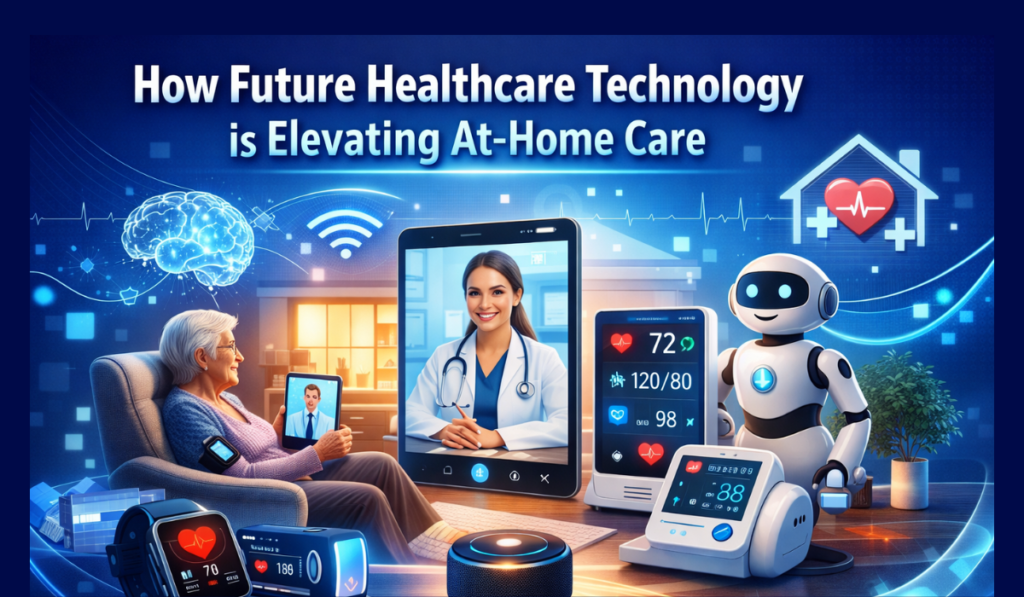
Healthcare is changing very fast. Earlier, people had to visit hospitals even for small problems. But now, things are different. With the help of modern technology, healthcare is coming directly into our homes.
Today, future healthcare technology in home care is making life easier, safer, and more comfortable for patients. From online doctor consultations to smart devices that track health, everything is becoming digital and advanced.
Let’s understand how this transformation is happening.
The Shift from Hospital to Home Care
In recent years, there has been a big shift from hospital-based treatment to home-based care. People now prefer staying at home instead of spending long days in hospitals.
There are many reasons behind this:
- Comfort of home environment
- Lower medical costs
- Better care for elderly people
- Easy access to digital healthcare
In fact, the global home healthcare market is expected to reach around $747 billion by 2030, showing how fast this sector is growing.
1. Telemedicine – Doctor at Your Home
One of the biggest innovations is telemedicine.
Now, you can talk to a doctor through your phone or laptop without leaving your home. You can:
- Get medical advice
- Show reports
- Take follow-ups
Studies show that around 89% of doctors believe telemedicine improves access to healthcare.
This is especially helpful for:
- People in villages or remote areas
- Elderly patients
- Busy individuals
2. Remote Patient Monitoring (RPM)
Another powerful technology is remote patient monitoring.
With this, doctors can track your health in real time while you are at home.
Devices can monitor:
- Blood pressure
- Heart rate
- Oxygen levels
- Blood sugar
If something goes wrong, doctors get alerts immediately. This helps in early detection of diseases and quick treatment.
3. Wearable Devices and Smart Gadgets
You must have seen smartwatches. But today, these devices are more advanced.
They can:
- Track your sleep
- Monitor heart health
- Count steps and activity
- Detect abnormal health patterns
These wearable devices help people stay aware of their health every day.
Some advanced devices even use AI to detect early signs of illness.
4. Artificial Intelligence (AI) in Home Healthcare
Artificial Intelligence (AI) is making healthcare smarter.
AI helps in:
- Early disease prediction
- Analyzing health data
- Suggesting treatment plans
For example, AI can study your health patterns and warn you before a serious problem happens.
In fact, the use of AI in healthcare has increased rapidly, with doctor adoption rising from 38% to 66% in just one year.
5. Smart Home and IoT Healthcare
Smart homes are now becoming health-friendly.
Devices connected through the Internet (IoT) can:
- Remind patients to take medicine
- Detect falls (important for elderly people)
- Monitor daily activities
This makes home care safer and more independent, especially for senior citizens.
6. Hospital-Level Care at Home
Yes, now even hospital-level treatment is possible at home.
This is called “Hospital-at-Home” care.
It includes:
- Doctor visits at home
- Medical equipment at home
- Continuous monitoring
This model can reduce treatment costs by more than 30% per patient.
Benefits of Future Healthcare Technology in Home Care
Let’s quickly look at the major benefits:
Comfort and Convenience: Patients feel relaxed at home, which helps in faster recovery.
Cost-Effective: No travel or hospital stay expenses.
Better Chronic Disease Management: Continuous monitoring improves long-term health.
Early Detection: Technology helps catch problems before they become serious.
Future of Home Healthcare
The future looks very exciting.
In the coming years, we may see:
- Healthcare robots helping patients
- More personalized AI-based treatment
- Fully smart homes with health systems
Healthcare will become more predictive, preventive, and personalized instead of reactive.
Conclusion
To sum up, future healthcare technology is elevating at-home care in a big way. It is making healthcare more accessible, affordable, and efficient.
Now, patients don’t need to depend only on hospitals. With the help of technology, quality healthcare is available right at their doorstep.
And this is just the beginning—the future of home care is even more advanced and promising.
Frequently Asked Questions (FAQs)
1. What is future healthcare technology in home care?
Future healthcare technology in home care refers to advanced digital tools like telemedicine, artificial intelligence, wearable devices, and remote monitoring systems that allow patients to receive medical care at home instead of hospitals.
2. How is technology improving home healthcare services?
Technology is improving home healthcare by making it faster, more accurate, and easily accessible. Patients can consult doctors online, monitor their health in real time, and receive early treatment without leaving their homes.
3. What are the most common technologies used in home healthcare?
Some of the most widely used technologies include:
- Telemedicine platforms
- Remote patient monitoring devices
- Wearable health trackers
- AI-powered diagnostic tools
- Smart home healthcare systems
4. Is home healthcare technology safe and reliable?
Yes, most modern home healthcare technologies are safe and reliable. However, proper data security measures and correct usage are important to ensure privacy and accurate results.
5. How does AI help in home healthcare?
Artificial Intelligence helps by analyzing patient data, predicting health risks, and assisting doctors in making better decisions. It can also detect early signs of diseases and improve treatment outcomes.
6. What is remote patient monitoring and how does it work?
Remote patient monitoring (RPM) uses digital devices to track a patient’s health data like heart rate, blood pressure, and oxygen levels. This data is shared with doctors in real time for continuous care.
7. Can elderly people benefit from home healthcare technology?
Yes, elderly people benefit greatly from home healthcare technology. It helps them stay independent, reduces hospital visits, and provides continuous monitoring for safety.
8. What are the benefits of home healthcare compared to hospital care?
Home healthcare offers:
- More comfort and convenience
- Lower costs
- Personalized care
- Reduced risk of infections
- Better long-term health monitoring
9. What challenges does home healthcare technology face?
Some common challenges include:
- Data privacy concerns
- Limited technical knowledge among users
- Internet connectivity issues
- High initial setup costs
10. What is the future of home healthcare technology?
The future includes advanced AI systems, healthcare robots, smart homes, and personalized treatment plans. Healthcare will become more preventive and patient-centered.